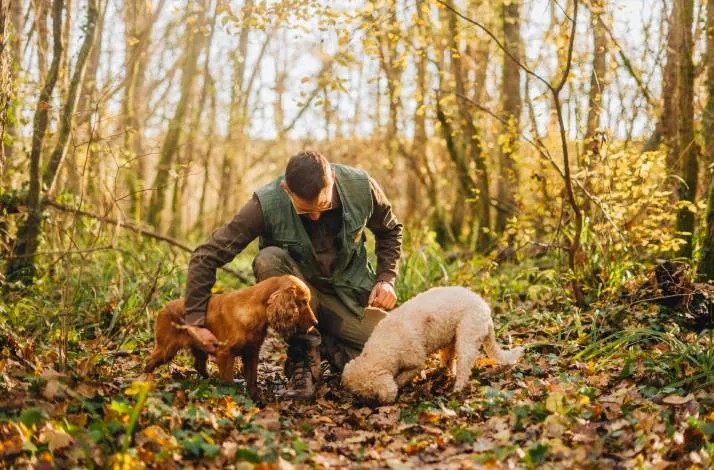
A truffle hunt in Istria is a short walk through a wet oak forest behind a dog that works far faster than anyone expects, followed by a very long lunch. The walking rarely lasts more than an hour. Most women who book one arrive picturing something closer to a hike, and leave having eaten more than they planned to. The dogs do the finding. The people do the eating. Somewhere in between, a farmer hands out rakija at ten in the morning.
It starts with rakija, not with walking boots
The welcome comes first, and it is more generous than the schedule suggests. One traveller who went out was greeted with homemade schnapps at ten in the morning, before anyone had set foot in the woods. The drink is often biska, the Istrian mistletoe brandy, and it arrives with cheese, pršut, and truffle spread while the family explains how the morning will go.
Nobody is hurried into the forest. The host talks about the dogs, the weather, how good or bad this year’s harvest has been. A woman arriving on her own usually finds a group of six to ten people already standing around the table, and the conversation starts well before the walking does.
The forest part is shorter than most people expect
Numbers make this clearer than adjectives. That same traveller reported the dogs digging within five minutes of entering the woods, and half a dozen truffles the size of ping-pong balls within twenty. That is a very good morning rather than a typical one, but it shows how compressed the hunting can be. Most operators plan for an hour of walking, sometimes ninety minutes.
The ground is the real surprise. This is the Mirna Valley and the Motovun Forest, floodplain oak woodland, and after autumn rain it turns to proper mud. Participants cross small streams, duck under branches and slide down short banks. Several operators keep spare rubber boots and disposable ponchos in the van for exactly that reason. Old trainers are the right footwear here.
The dog finds it, the hunter digs it, and Croatian law is specific about both
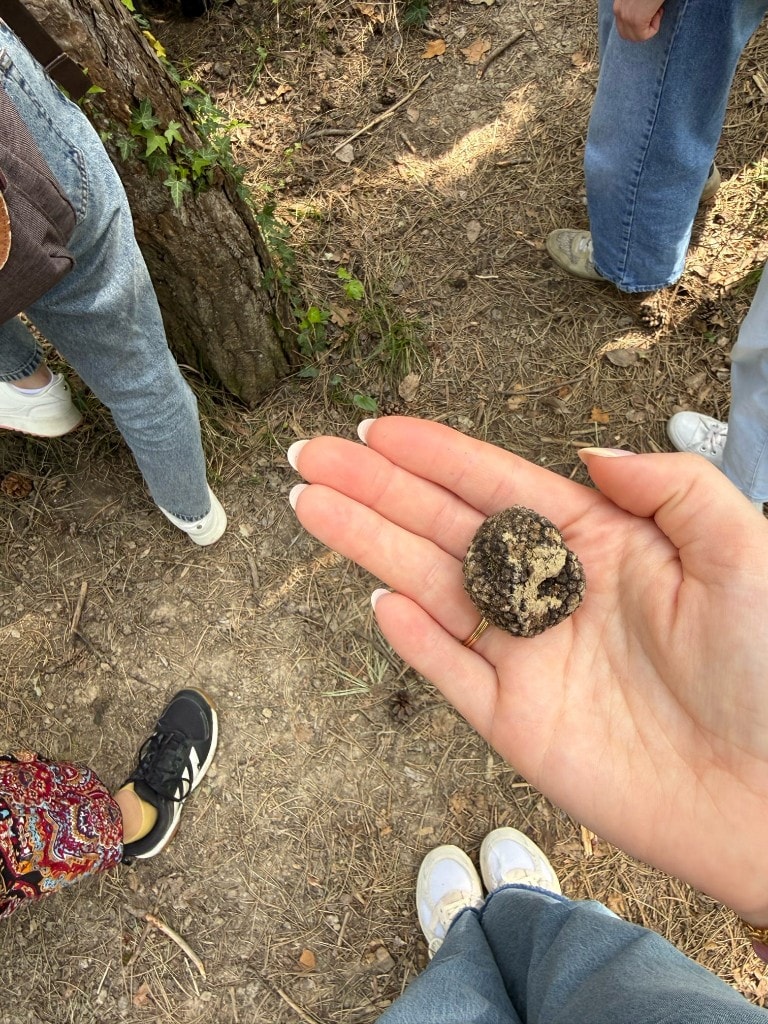
Visitors do not dig. Croatian regulation puts the spade in the hands of the licensed truffle hunter and goes as far as specifying the tool: a blade no longer than 15 cm and no wider than 8 cm, so the mycelium underneath survives to fruit again. A hunter may work a maximum of two trained dogs at once, and personal collecting is capped at 100 grams per person per day.
This is how it is happening. The dog stops, noses at the leaf litter, then starts scraping. The hunter kneels, moves the last few centimetres of soil by hand, and lifts out something that looks like a dirty potato and smells like nothing else on earth. The dog gets a piece of cheese and goes straight back to work.
Lunch is the part nobody warns you about
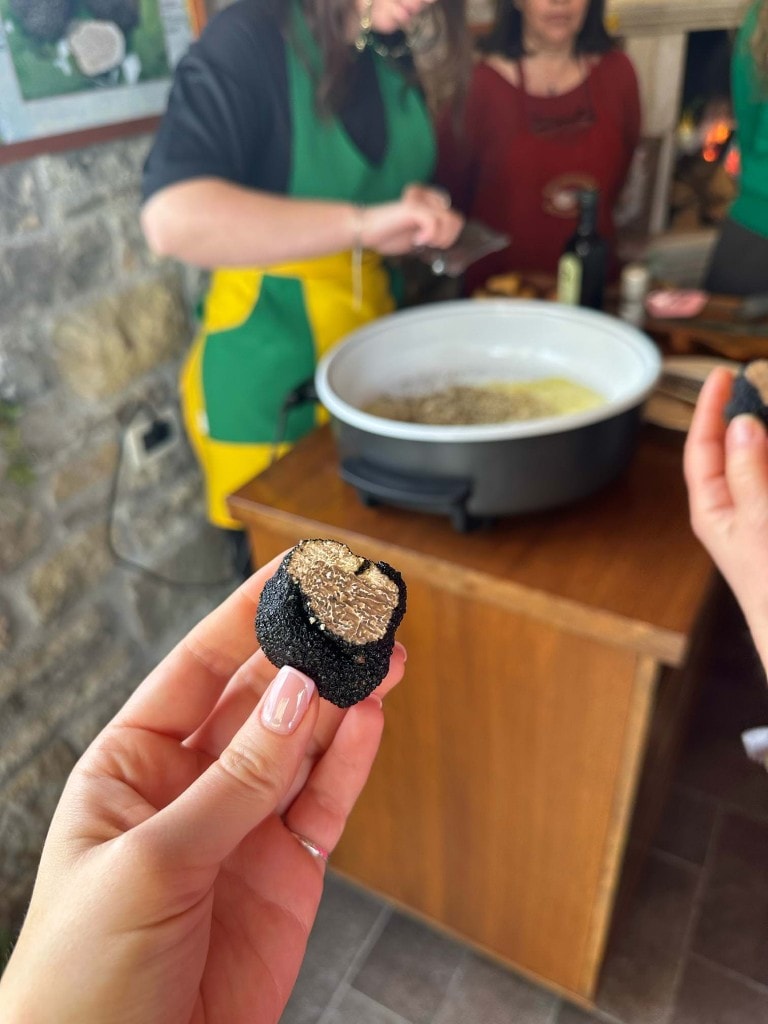
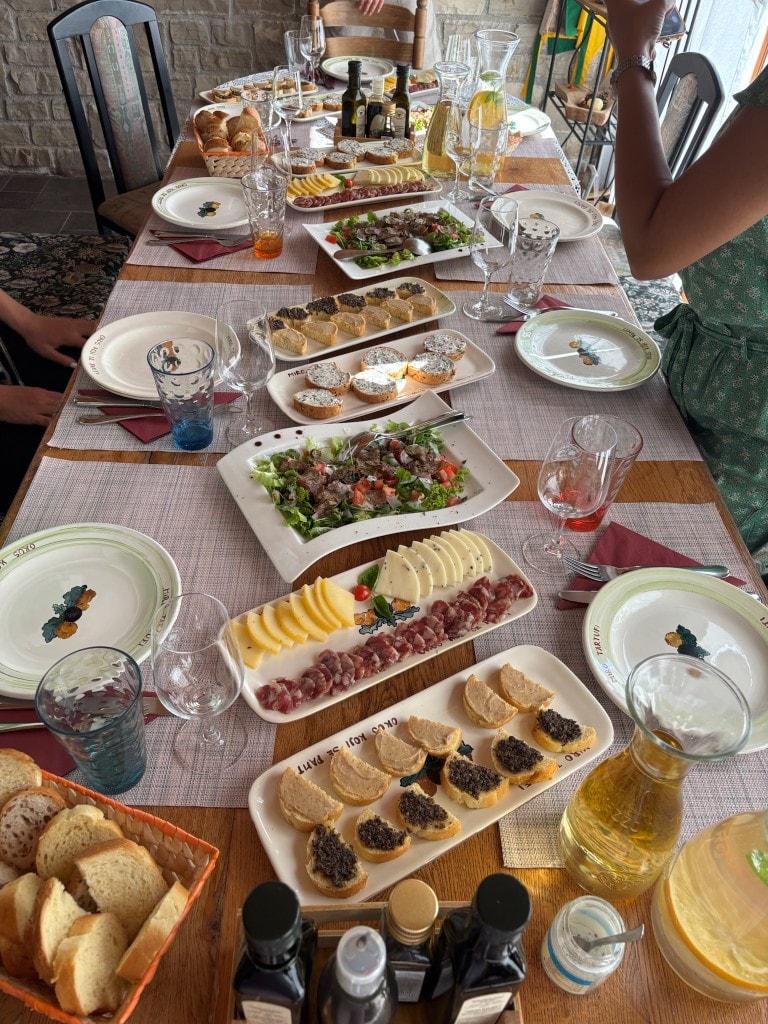
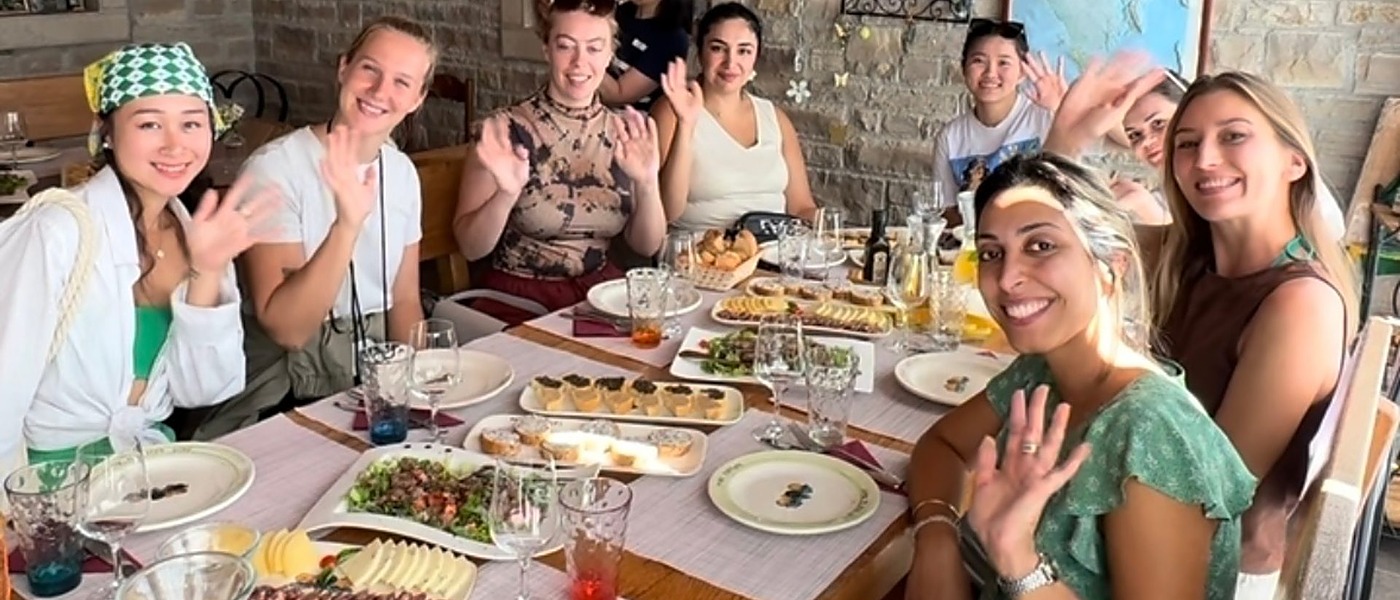
The tasting is not a plate of crackers. It is a meal, and at the family estates it runs to three courses. Scrambled eggs with fresh truffles shaved over the top is the standard opener, because eggs and fat carry the aroma better than anything else does. Then come fuži or pljukanci, the two Istrian pastas, followed by cheese, honey, truffle oil, and a glass of Malvazija or Teran. Sometimes you finish the meal with something they call Truffella, white and dark chocolate with truffle folded through it.
Two practical points. The whole tasting is built on eggs, cheese and cured meat, so vegetarians manage comfortably, and vegans need to say so when booking rather than on the day. And there is alcohol at both ends of the morning, which matters a great deal for anyone who drove herself out there.
Why dogs, and why the pigs were retired
Almost every working dog in Istria is a Lagotto Romagnolo or a Lagotto cross, curly-coated, cheerful and slightly obsessive about the job. Hunters usually keep lots of dogs divided into two groups. Experienced and those that are still learning, and deliberately hold on to crossbreeds because they cope better with cold and rain. More than one hunter will say the best nose they ever had belonged to a mixed-breed female.
Pigs did this work for centuries and were better in one respect: they find truffles by instinct, with no training at all. The trouble was the second half of the transaction. A pig that finds a truffle wants to eat the truffle, and a sow who has made up her mind is not easily argued with. Dogs have no natural interest in eating them, which is precisely what makes them trainable.
White or black changes when you should come
| Species | Season | What it means for the visit |
|---|---|---|
| Tuber magnatum, white truffle | September to December | The expensive one. Peaks in October, shaved raw, unmistakable aroma |
| Tuber uncinatum, autumn black | October to January | Overlaps the white season and costs far less |
| Tuber melanosporum, winter black | November to March | Handles heat, so it goes into cooked dishes |
| Tuber borchii, spring white | January to March | Milder and cheaper, often confused with magnatum |
| Tuber aestivum, summer black | June to July, and September | What most summer visitors meet. Gentle, affordable |
October is the month if there is a choice. The white truffle and the autumn black are both up, the forest is wet enough for the dogs to work properly, and the villages around Livade and Buzet are running their fairs. A June visit still makes a good morning, but the truffle landing in the pan will be Tuber aestivum, which costs a fraction of the white and tastes like it.
One warning about dates. Croatia has changed the collecting rules more than once, and the Istrian tourist board and the current regulation do not always list the same months. Ringing the estate beats trusting any published table, including this one.
Summer hunts are demonstrations and autumn hunts are the real thing
Outside the season there is nothing in the ground, and a handful of operators have been caught burying old truffles for the dog to find. One woman on the Slovenian side of Istria was told outright, after she challenged her guide, that the truffles had been planted the previous day. The tour lasted an hour and cost 150 dollars a head.
The established family estates handle it differently. They will say directly that a July hunt is a demonstration, that the dog is showing what it does, and that the meal is the reason to come. For a summer morning, that is a fair trade. Booking what sounds like a wild autumn hunt and being handed a demonstration is not, and the difference is worth one question on the phone: what have the dogs actually been finding this week?
Going alone is easier here than at most activities
Truffle hunting in Istria happens at family farms, with the host’s wife or daughter cooking, and the whole thing lasts three or four hours around one table. Groups are small, usually capped somewhere between eight and twelve, and made up of couples and families, so a woman on her own gets absorbed into the group rather than parked at the edge of it.
Women run a good number of these operations. Ivana Karlić Ban is the third generation of her family in the truffle business and leads hunts herself. At Miro Tartufi, Mirjana cooks the lunch that follows the walk. Guides speak good English, the pace is conversational, and nobody performs.
There is also a quiet advantage to travelling in low season. One traveller who booked in late 2025 turned out to be the only person signed up that day, which made it a private hunt at the group price. That happens far more often in November than in August.
The things that actually catch solo travellers out
Getting there. Livade and Paladini are not usefully served by bus. Livade sits roughly 34 km from Poreč, 58 km from Rovinj and 75 km from Pula, and Istrian roads are slower than the distances suggest. Anyone without a car should book an operator who collects from the coast, or go through an agency day trip, rather than trusting a rural timetable in October.
Cash. Several family estates still prefer it, including for the hunt itself. An ATM stop before leaving the coast saves an awkward moment at the table.
Booking ahead. Autumn weekends go first. Karlić asks for three working days’ notice, and in October a week or two is more realistic.
Rain. Hunts run in it. Refunds tend to be reserved for genuinely impossible conditions, so the waterproof goes in the bag rather than staying in the hotel.
The shop at the end. There is always one. The pressure is mild, but a visitor who has just drunk two glasses of Teran is not at her most price-sensitive.
Taking it home. Anyone flying back to Great Britain cannot bring fresh truffle, pršut or cheese with them. Jarred and preserved truffle products travel without any problem at all.
Most of what puts women off a trip like this has an answer that takes one phone call to the estate. Nobody leaves a truffle hunt hungry, and almost nobody leaves with the truffle. It stays behind, gets weighed and graded, and a good deal of the best of it crosses the border to be sold under an Italian name, which is a much longer story than one morning in the woods.