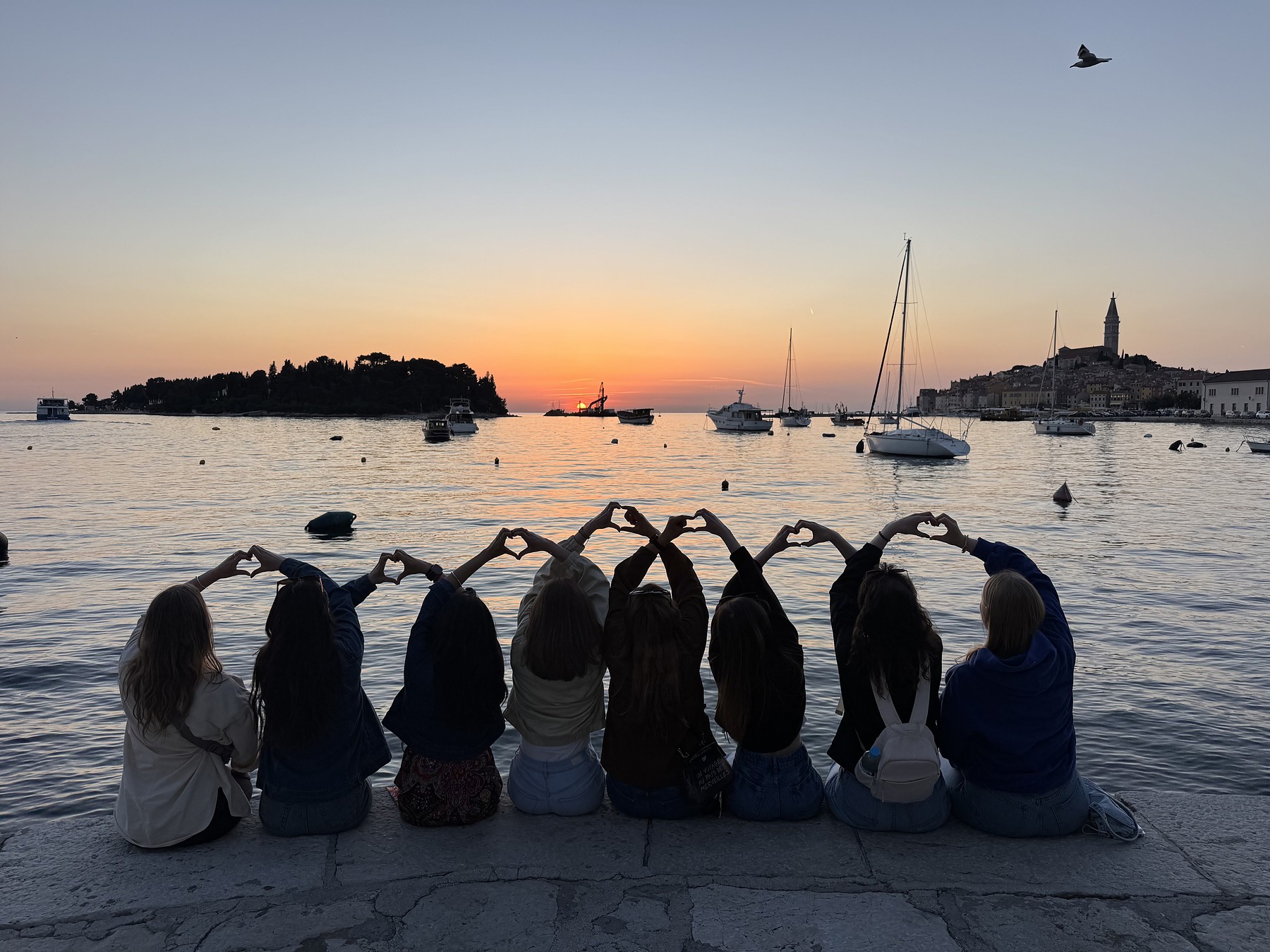
For your first trip as a woman, independent solo travel makes sense if you want control over your time and feel comfortable arranging transport and accommodation. A small group tour is worth considering if you want company and help with logistics. You can also combine the two: book your own stay and join guided activities for the parts you would rather share.
You can be excited about travelling alone and still worry about the bits nobody puts in the photographs. Finding the hotel after dark. Eating dinner when every other table seems to have two people at it. Getting your period on the morning of a boat trip. Wondering whether you will actually like the woman sharing your room.
My starting point would be to ask which parts you want to do alone, and which parts you would enjoy more with support. You might love choosing your own cafés but have no interest in researching six different bus connections. You might happily navigate a city and still want someone to share dinner with.
Your first trip can be built around that combination.
Solo travel vs a group tour: what actually changes?
Independent solo travel means organising and managing your own trip. A group tour means joining an itinerary arranged by an operator, usually with a guide, host or tour leader. Booking a tour on your own is still setting off without a friend or partner; it simply gives you a different structure once you arrive.
| Part of the trip | Independent solo travel | An organised group tour |
|---|---|---|
| Planning | You choose and book each part | The operator arranges the services listed as included |
| Daily pace | You can sleep in, change plans or take a quiet afternoon | You work around shared departure times and the itinerary |
| Company | You seek it out when you want it | You have people around, although friendships are not guaranteed |
| Privacy | You choose your own room or shared accommodation | The package may assume room sharing; private rooms depend on the trip |
| Unexpected changes | You contact providers and arrange alternatives | A leader can help within the tour’s scope |
| Personal needs | You can adapt plans around rest, symptoms or preferences | Flexibility depends on transport arrangements and optional activities |
| Cost | You control the individual bookings | You pay the package price plus exclusions and any extras |
A large coach tour, an active hiking holiday and a relaxed week with a small group of women are very different products. Read the actual itinerary before deciding whether “group travel” suits you.
Is a group tour safer for a woman travelling alone?
A well-organised tour can provide practical support, but it does not guarantee safety. Its value depends on the destination, the operator, the leader and the arrangements during free time.
In practical terms, having transport and accommodation organised can remove decisions you would otherwise make while tired or unfamiliar with a place. That is a reason to consider a tour, rather than evidence that every tour is safer than every independent trip.
The FCDO’s advice for women travelling abroad recommends researching local culture and risks affecting women. It explicitly includes women travelling in female-only groups.
Look beyond the words “safe” and “women-friendly”. Ask who you can contact, what happens if you feel uncomfortable, and which parts of the journey are your responsibility.
Make the first evening easy
For an independent trip, book your first night and decide how you will reach it. The UK government’s solo travel guidance recommends considering prearranged airport transport, sharing your itinerary and agreeing check-ins with someone at home.
Then check the small details:
- Will reception or your host be available at your arrival time?
- Can a taxi stop close to the entrance, or will you be carrying luggage down unfamiliar lanes?
- Have you saved the address and check-in instructions offline?
- What will you do if the transfer does not arrive?
On a tour, confirm exactly where the organised part begins. “Transfers included” may refer to transport between activities rather than pickup from your flight.
You can leave a situation without explaining yourself
If someone is making you uncomfortable, you do not need to settle whether they “meant anything by it” before changing seats, leaving or asking for help.
On a tour, speak to the leader privately. If the concern involves the leader, you need a separate operator contact. Ask for that contact before departure.
A useful sentence is: “I’m uncomfortable with this, and I need a different arrangement.”
Harassment is the responsibility of the person doing it. Choosing a tour, dressing a particular way or following a checklist does not make you responsible for someone else’s behaviour.
Plan your own way home after an evening out
A group dinner does not necessarily mean a group return. People may stay for drinks, split into smaller groups or head elsewhere.
Before going out, know how you would get back if you wanted to leave first. Keep access to your own money and transport. The Australian government’s travel safety advice for women specifically recommends retaining control over transport when socialising with new people.
Keep your drink with you. If you suddenly feel unwell or unusually intoxicated, seek help promptly from someone you trust or local emergency services; the FCDO’s women’s travel advice explains this risk.
These preparations leave you free to enjoy the evening without depending on someone else’s decision to leave.
Sharing a room: the detail to settle before you pay
Joining a group does not automatically mean getting your own bedroom. Some packages price accommodation on a shared basis, and some itineraries have communal stays even when a private-room upgrade is available.
For example, Intrepid’s accommodation FAQ describes its usual twin-share arrangement and a single supplement on most trips. It also identifies exceptions involving shared accommodation.
Before booking any tour, establish whether “sharing” means separate beds, a double bed, a cabin or a dormitory. Then ask whether the bathroom is shared too.
Think about your ordinary habits. Do you need quiet to sleep? Do you take a while to get ready? Would you feel comfortable changing clothes in a shared room, or managing a heavy period with limited bathroom privacy?
None of those questions makes you difficult.
If you do share, agree on a few things early: bedtime, alarms, bathroom time and whether either of you is comfortable having visitors. You can be friendly without sharing every part of your evening.
A women-only dorm or tour room may feel more comfortable, but the label does not guarantee considerate roommates or secure accommodation. Check access arrangements, locks, storage, and what the operator can do if the pairing is unsuitable.
A private room can be worth paying for if it lets you enjoy the social part of the trip and then properly switch off.
What about periods, bathrooms and feeling unwell?
The better itinerary is the one that accommodates your needs in practice. Independent travel gives you control over timing; a group trip may provide help, but you need to check how easily plans can change.
Travelling during your period
If you have periods, pack the products you already know how to use, with a few in your day bag. Smartraveller notes that preferred menstrual products and contraception may not be readily available in every destination — see its travel safety advice for women.
A holiday with overnight buses, basic accommodation or long boat days needs a little more thought than a stay with a private bathroom.
Ask about the longest stretch without a toilet stop, the facilities on boats and access to water and privacy. If you use reusable products, check that the facilities suit your cleaning routine. A travel day is a poor moment to learn a new product from scratch.
If your period can be painful or heavy, look at the itinerary as though it arrives on the busiest day. Can you skip the hike? Is there somewhere comfortable to rest? Would missing one activity also mean missing the group’s transport to the next hotel?
You can tell a host, “I may need extra bathroom stops or a quieter day.” You do not owe the whole group a medical explanation.
If you are considering delaying your period, speak to a clinician or pharmacist before the trip. The NHS explains that the options depend on your circumstances and medication.
Medication, contraception and illness
If you take medication on a schedule, make a plan before crossing time zones. Timing requirements differ between contraceptive pills, as the NHS guidance on the progestogen-only pill illustrates. Ask a pharmacist about your specific product rather than following a general travel tip.
For a group trip, establish who helps you find medical care, whether someone can accompany you, and what happens if you cannot continue the itinerary. A host can help with arrangements; medical treatment requires an appropriate professional.
For an independent stay, save a nearby clinic or pharmacy and your insurer’s assistance details. Check that your insurance covers your circumstances and planned activities, including relevant existing conditions.
If you are pregnant or need specialist care, include access to healthcare in the choice of destination and itinerary, not just the choice between travelling alone and joining a group.
Swimwear, changing and photographs
On beach, sailing or activity trips, ask where you will change and whether swimming is optional. If you are not confident in the water, tell the operator beforehand and ask about suitable activities and safety arrangements.
You are also allowed to set a boundary around photographs: “Please ask before posting pictures of me, especially in swimwear.”
A shared holiday does not require you to appear in every group photo or agree to public posts. Smartraveller also advises considering how social media reveals your location; posting after leaving a place is one practical option.
Will I feel lonely travelling independently?
Travelling alone gives you time to yourself; it does not automatically provide the company you may want. Plan a few opportunities to meet people rather than hoping it happens at every café.
A cooking class, walking tour or guided day trip gives conversation a natural starting point. You have something to talk about before the awkward “so, where are you from?” stage.
For a first independent trip, booking one social activity early can help. You still have the rest of the day to yourself.
Dinner deserves its own plan if that is the part you are dreading. Try a casual place for the first evening, choose an earlier time or book a food tour on one night. Bring a book if you want one. You do not have to turn eating alone into an exercise in looking confident.
A group tour provides people to share meals and experiences with, but you may still feel out of place occasionally. Read reviews for descriptions of the atmosphere: are evenings relaxed, does everything revolve around nightlife, and does the leader help quieter guests join conversations?
Wanting company does not mean you want constant company. Even on a sociable trip, a quiet walk or an early night can make the next day more enjoyable.
Is a women-only tour better than a mixed group?
A women-only tour may suit you if you would feel more at ease in that setting. The itinerary, atmosphere and practical arrangements still matter.
It may feel easier to discuss periods, room privacy or unwanted attention with other women. However, a group of women can have just as many different sleep schedules, spending habits and ideas of fun as any other group.
Check:
- Whether there is an age range or restriction.
- Whether guests usually join alone, with friends or as couples.
- How much the trip centres on alcohol or nightlife.
- Whether the advertised leader is a woman.
- How room assignments and concerns are handled.
- Whether the operator has clear inclusion policies relevant to you.
A female leader does not necessarily mean a women-only group.
If you are a woman of colour, LGBTQ+ or travelling with a disability, look for reviews and destination advice relevant to your circumstances too. Smartraveller recognises that different aspects of identity can affect the risks travellers encounter.
Choose a group whose actual arrangements fit you, rather than assuming a marketing label answers every question.
Is independent travel cheaper than a group tour?
There is no automatic cheaper option. Compare complete costs for the same dates, accommodation standard and activities.
An independent hostel stay is not a fair comparison with a tour that includes hotel rooms, transport and excursions. Equally, a tour’s headline price can look attractive until you add excluded meals and a private-room charge.
| Cost to compare | What to check |
|---|---|
| Getting there | Flights, luggage and transport to the starting point |
| Accommodation | Number of nights, room type, bathroom arrangements and supplements |
| Transport | Airport pickup, journeys between stops and transport during free time |
| Food | Which meals are included and what you need to budget separately |
| Activities | Included experiences, optional extras and entrance fees |
| Other costs | Insurance, visas where required, expected tips and personal expenses |
A single supplement is an additional charge for occupying accommodation alone when the package price assumes sharing. Ask whether the supplement covers every night and whether a private bathroom is included.
For an independent trip, keep enough flexibility in the budget to change an unsuitable room, use reputable transport or deal with an unexpected delay. A plan that depends on everything going perfectly is hard to relax into.
Paying for organised support can be worthwhile. So can spending that money on a comfortable independent base. What matters is whether you will use what you are paying for.
A middle option: your own base, with a little company
You can travel independently without doing every activity alone. Book your accommodation and arrival arrangements, then add guided experiences where they solve a practical problem or offer company you would enjoy.
An illustrative four-night first trip might look like this:
- Arrival: check in, find somewhere nearby for dinner and keep the evening simple.
- First full day: join a walking tour, then explore at your own pace.
- Second day: take an organised excursion that would be awkward to reach alone.
- Third day: leave time open, with a food tour or class if you want a social evening.
- Departure: use the return arrangement you checked before the trip.
This is a suggested format, rather than a rule about how long your first trip should be.
If Croatia is on your list, our solo female travel guide to Croatia can help you compare routes and places to stay.
You can also add independent time after a group trip. Once you know the area a little, an extra night may feel more manageable than arriving alone somewhere entirely unfamiliar. Book it in advance if you would prefer to avoid another decision at the end.
Eight questions to ask before booking a group tour
These questions help turn a promising itinerary into a trip you can assess properly.
- Where does your support begin and end? Confirm arrival arrangements, the meeting point and help outside scheduled activities.
- What is the room arrangement? Ask about beds, bathrooms, private-room availability and any shared exceptions.
- How much time is genuinely free? Check the daily pace, travel hours and optional evening plans.
- What happens if I skip an activity? Establish whether you can stay behind comfortably and still reach the next stop.
- How are bathroom breaks and personal needs handled? Be specific about long drives, boat days and any relevant requirements.
- Who handles uncomfortable behaviour? Ask about the reporting process and a contact independent of the leader.
- What is the full cost? Include supplements, meals, transfers, optional activities and other exclusions.
- What happens if plans change? Read cancellation terms, minimum-group rules and the arrangements if you become unwell.
You should be able to understand the answers before paying a deposit.
For the independent version, use our preparation guide for women travelling solo to work through the bookings, paperwork and packing.
Which travel style fits your first trip?
Think about an ordinary evening and a difficult travel day.
On the ordinary evening, would you enjoy choosing your own restaurant and heading back whenever you like, or would you prefer to sit down with people you have spent the day with?
On the difficult day, would you feel able to find an alternative connection, or would having a leader manage the route make a big difference?
Choose independent travel if privacy, flexibility and making your own choices are central to the holiday you want. Keep the first itinerary manageable enough that the planning does not overwhelm the enjoyment.
Choose a group tour if you mainly want shared experiences and help with the route. Look for a pace, room arrangement and atmosphere you would enjoy, rather than the itinerary with the most stops.
Choose a combination if you want your own space but support for particular activities, transport or social evenings.
At Solo Yet Together, our Girls Do Istria trip offers a small women-only group, a local host, organised in-destination transport and shared villa accommodation. The published inclusions specify two people per room; flights and travel insurance are excluded. Check the current trip details and discuss any room or personal requirements before booking.
The useful question is whether that arrangement suits the holiday you want.
Your first trip should be comfortable
Your first trip does not have to settle what kind of traveller you are forever. It can simply tell you that you like a private room, enjoy a shared dinner and would rather pay someone else to organise the complicated excursion.
That is useful knowledge to bring home. The next trip can grow from there.