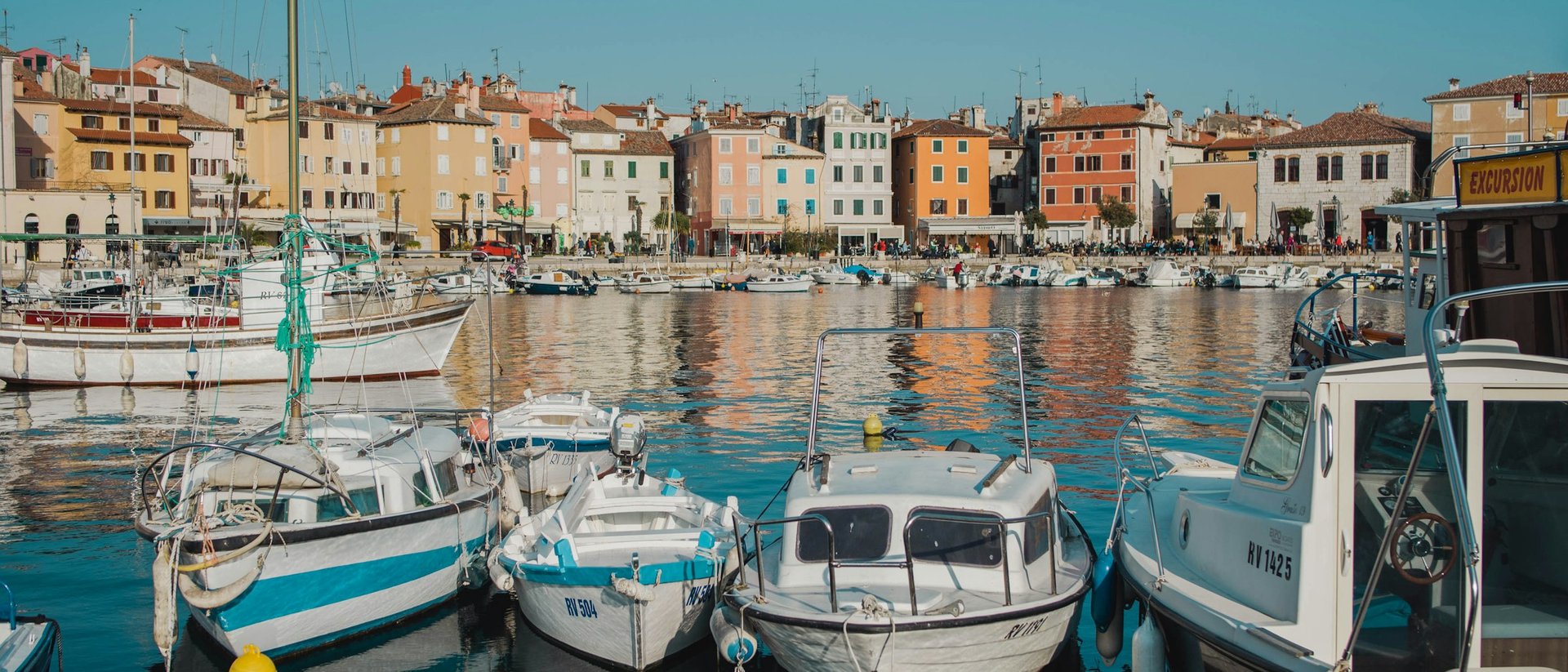
Istria is the heart-shaped peninsula at the top of the Croatian Adriatic, closer to Venice than to Dubrovnik and known as “terra magica”, the magic land.
Where Dalmatia gives you bare limestone islands, and Hvar gives you nightlife, Istria gives you oak forest, vineyards, olive groves and medieval hilltop towns that look like they were lifted out of Tuscany. The coastline is Venetian and full of cobbled old towns. The inland is Slavic and Glagolitic. That is why Istria tours are so popular.
This Istria travel guide covers the places worth building an itinerary around, from a Roman amphitheatre still used for concerts to a walled town of twenty people. Almost all of it fits inside a peninsula you can drive across in ninety minutes, which is the real argument for coming here.
Pula and the Roman arena
Pula is situated at the southern tip of the peninsula and is the one place in Istria where the Roman Empire is still the main event. The Arena was built in the first century and is one of the very few amphitheatres anywhere that kept all four of its side towers. The outer wall reaches about 32 metres, and the stands once held roughly 20,000 people. Underneath, the hypogeum where animals and gladiators waited now holds an exhibition on Roman olive oil and wine production.
The Arena opens every day except New Year’s Day, roughly 8 am to 10 pm in high summer and much shorter hours in winter. Come early or in the last hour of daylight. It still hosts concerts and the Pula Film Festival, so check the official schedule before you go, in case an event closes it on your date.
Rovinj and the church of St. Euphemia
Rovinj was an island until 1763, when the channel separating it from the mainland was filled in. That is why the old town is packed so tightly: cobbled lanes climbing between tall Venetian houses. Grisia is the street everybody photographs, lined with small galleries.
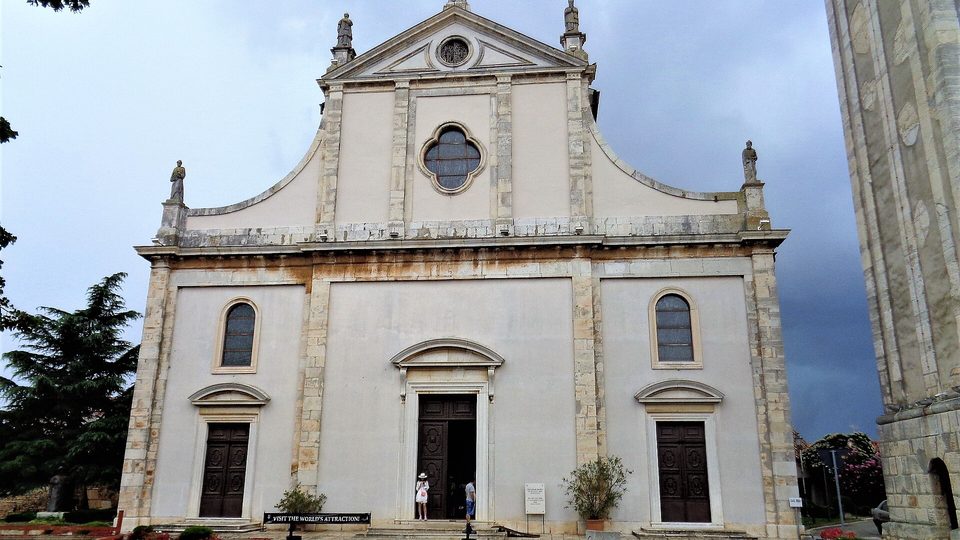
At the top stands St. Euphemia, built between 1720 and 1736 and the largest baroque church in Istria. The bell tower is about 60 metres high and copies the campanile of St Mark’s in Venice. At the top is a copper statue of St. Euphemia that turns with the wind. Inside is her marble sarcophagus, which legend says drifted ashore here in 800 AD after vanishing from Constantinople, then was hauled up the hill by a boy with two oxen.
You can climb the tower for a small fee, though the stairs are close to 200 open wooden treads. Zlatni rt park just south has the best beaches in this part of Istria.
Motovun
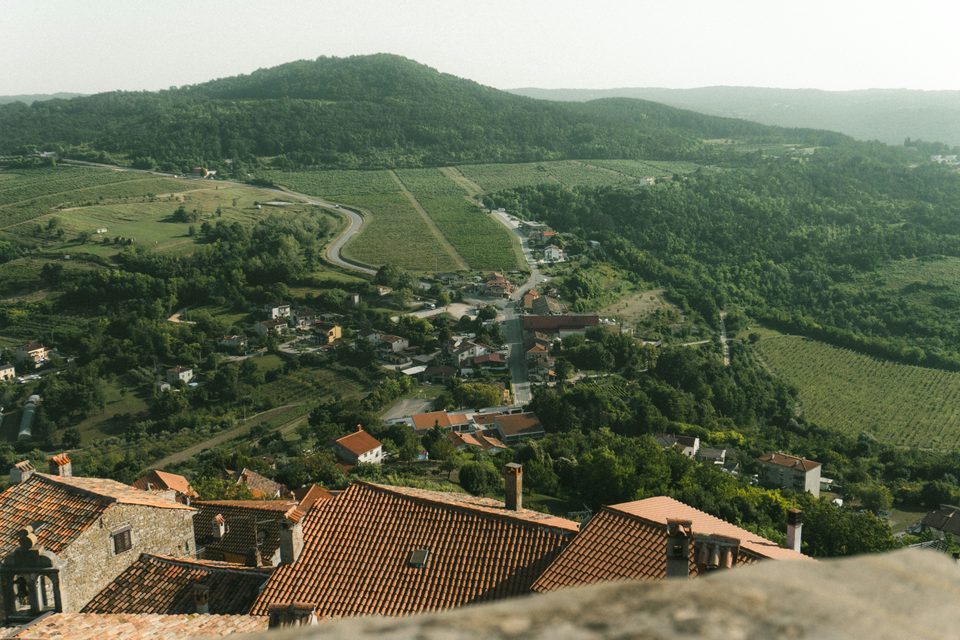
Motovun is the hilltop town people mean when they say Istria looks like Tuscany. It stands high above the Mirna valley, wrapped in medieval walls. The view takes in vineyards, the river, and the Motovun forest, which is where most of Istria’s truffles come out of the ground.
The town itself is small: two gates, a main square, a Venetian loggia and a stone lion. Cars stop below, and you walk up, or take the shuttle in season. The lower car parks fill early on summer mornings. Late July brings the Motovun Film Festival, when the square turns into an open-air cinema and the population multiplies for a week. Any other time the place is quiet by four in the afternoon, and that is when it is best.
Grožnjan
Grožnjan nearly disappeared. After the Second World War most of its Italian-speaking population left and the town emptied. In 1965 it was declared a town of artists, and the abandoned houses were handed to painters, sculptors and printmakers who agreed to restore them and open studios. In summer there are around thirty galleries and workshops in a village of a few hundred people.
Since 1969 it has also hosted an international music school. The Jazz is Back festival runs in late July. The Parenzana trail passes just below the town at its highest point, 293 metres, which makes Grožnjan the natural lunch stop for anyone cycling it.
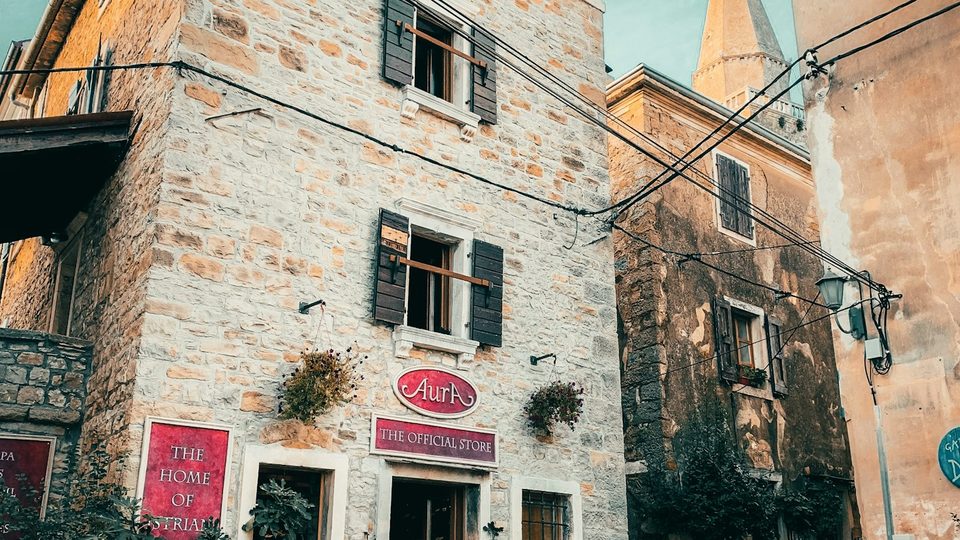
Hum, the smallest town in the world
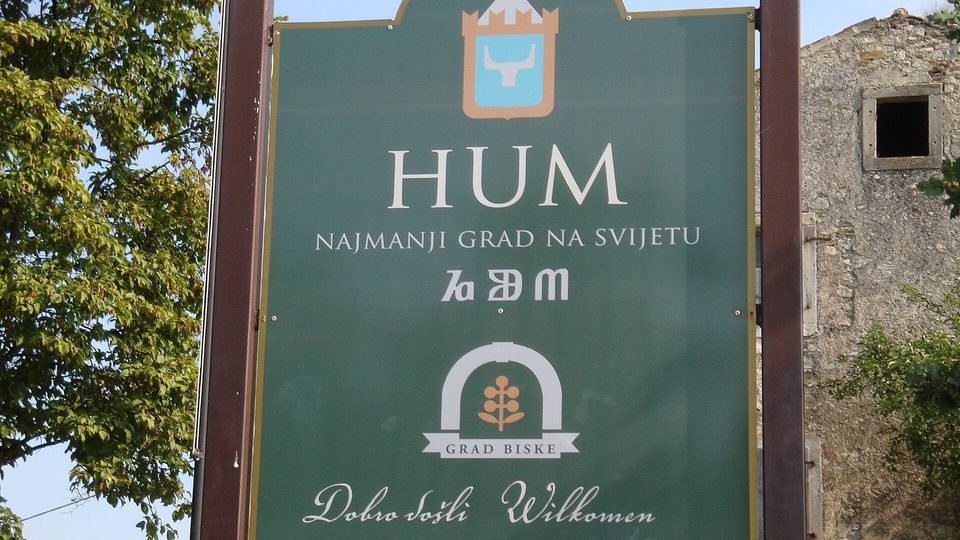
Hum is a walled town measuring roughly 100 by 35 metres, with a population of about twenty. It has two streets, three rows of houses, a church, a bell tower, a loggia and a copper gate that still gets locked at night. Nothing was ever built outside the walls, which is what keeps it a functioning town rather than a ruin.
First mentioned in 1102, it still elects a mayor every June: the men gather at the loggia and carve their votes into a wooden stick. The other reason to come is biska, a mistletoe brandy made here to a recipe locals trace back roughly two thousand years to the Celts. Taste it at Humska konoba, the town’s one restaurant, and come in October for the brandy festival. Give the town an hour, then drive on to Roč.
The Temple of Augustus in Pula
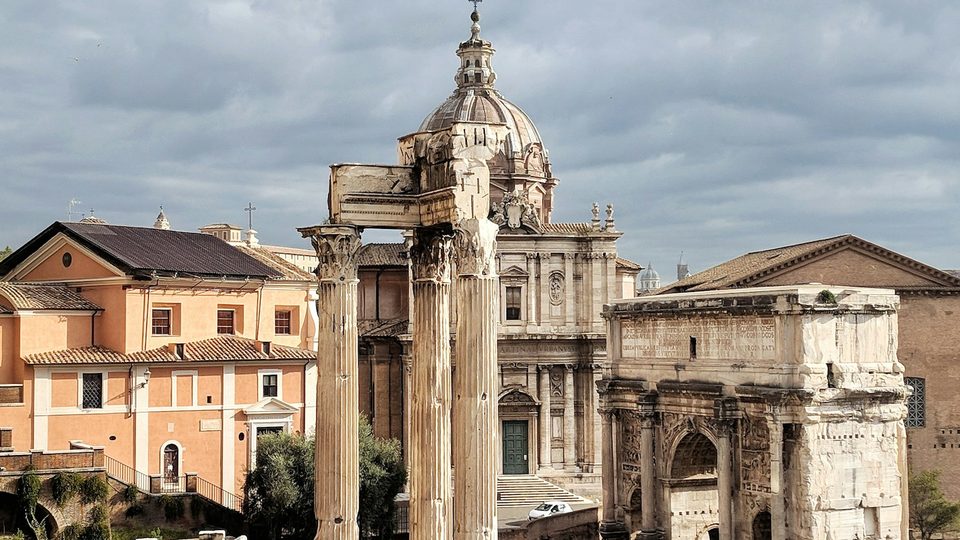
On Pula’s Forum, still the main square after two thousand years, stands a small Roman temple dedicated to the goddess Roma and the emperor Augustus. It was finished before Augustus died in AD 14, making it one of the oldest intact Roman buildings outside Italy.
It served as a church, then a granary, then a museum. An Allied bomb destroyed it in 1944, and it was rebuilt from its own stones by 1947. Inside is a small collection of Roman sculpture and bronzes. Next door, the Communal Palace has the back wall of a second temple built into it, the Temple of Diana, which is why that side of the building looks so strange up close.
Glagolitic Alley
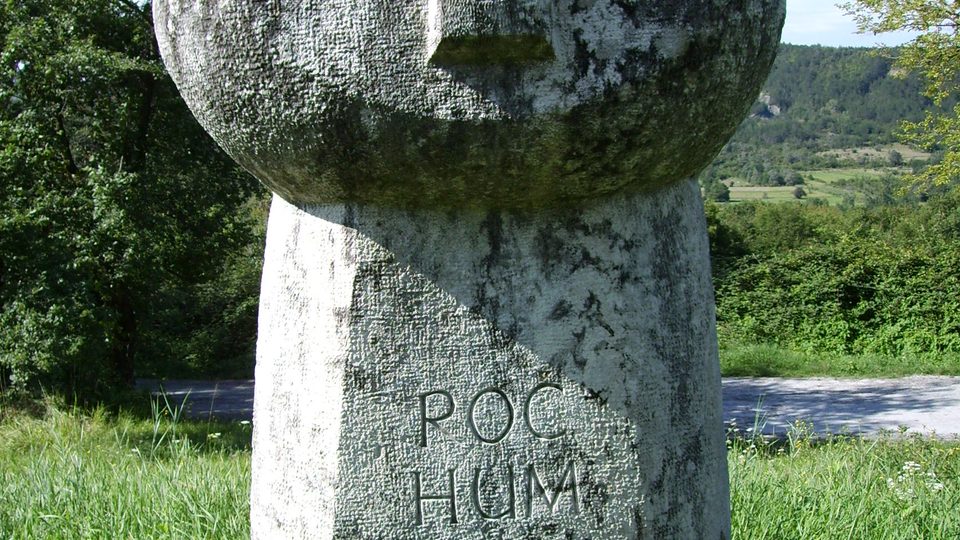
Between the villages of Roč and Hum runs a seven-kilometre road lined with eleven monuments, put up between 1977 and 1985 to honour the Glagolitic alphabet, the oldest Slavic script. Roč had been a centre of Glagolitic writing since the thirteenth century, and Istria kept the script in everyday use far longer than most of Europe kept anything comparable.
The idea came from the writer Zvane Črnja. The monuments were carved by the sculptor Želimir Janeš, and the historian Josip Bratulić decided what each should commemorate. The first, at the foot of Roč, is a pillar shaped like the Glagolitic letter S. Ten are stone. The eleventh is the copper town gate of Hum itself.
The mummies of Vodnjan
Vodnjan, ten kilometres north of Pula, has the largest parish church in Istria and by some distance the strangest thing inside one. Behind the main altar of St. Blaise lie three complete, unembalmed bodies in glass cases: Leon Bembo, who died in 1188, John Olini, who died in 1300, and Nicolosa Bursa, who died in 1512 and is often called the best-preserved mummy in Europe. Alongside them sit a torso, a foot, a tongue and a finger belonging to four other saints.
None of them was treated, sealed, or embalmed. They were brought here from Venice in 1818 to save them from destruction. The sacristy treasury holds another 370 relics from 250 saints, plus a polyptych painted by Paolo Veneziano in 1321 that once served as the lid of Bembo’s coffin. The church is free, the mummies and treasury are ticketed, and the dress code is enforced.
Brijuni National Park
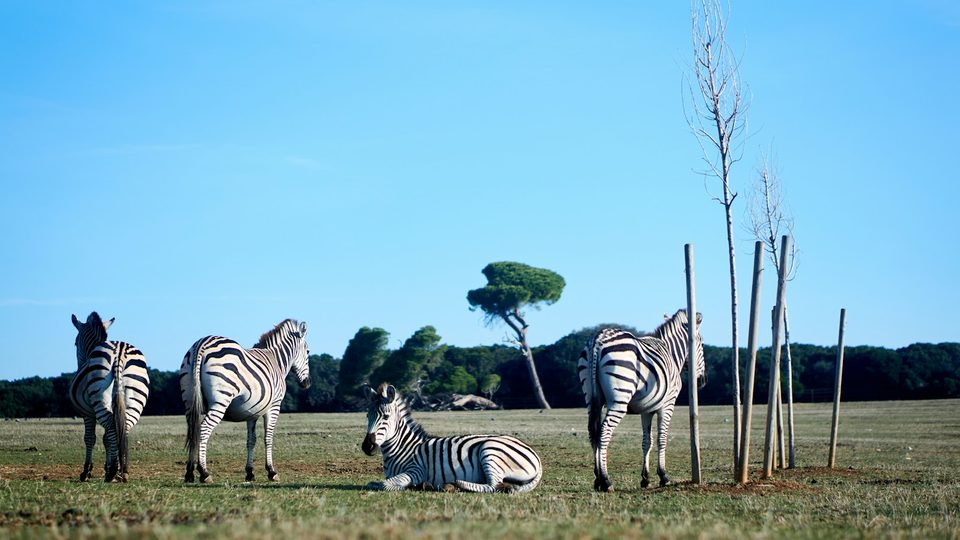
Fourteen islands off Fažana, and the most layered place in Istria. There are dinosaur footprints in the rock, a Roman villa at Verige Bay, the ruins of a Byzantine fortress, and a golf course laid out by an Austrian industrialist who drained the malarial swamps here in the 1890s.
Then there is Tito. From 1949 until shortly before his death in 1980, Veliki Brijun was his summer residence, and he received more than a hundred heads of state on it. Visiting leaders kept giving him animals, which is how a safari park with zebras and antelope ended up on a small Adriatic island. Their descendants are still grazing there.
You cross on the national park boat from Fažana, about fifteen minutes. Most visitors book the standard excursion, which bundles the boat, a guide, the tourist train around the island, the safari park and the museum. Book online in advance in summer.
Učka Nature Park
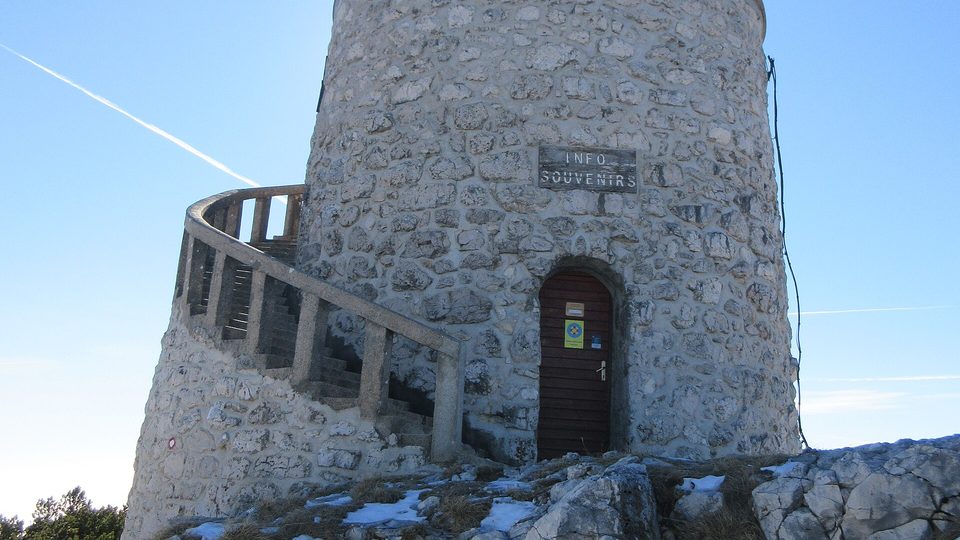
Učka is the mountain wall along Istria’s eastern edge, protected as a nature park since 1999. Its summit, Vojak, reaches 1,401 metres and is the highest point on the peninsula. On top stands a stone lookout tower built in 1911 by an Austrian touring club, used as a military observation post in the First World War and now the park’s symbol. From it you see most of Istria, Kvarner Bay and its islands, Velebit, and on a very clear day the Alps and even Venice across the water.
The easy way up starts at the Poklon pass, 922 metres, about three and a half kilometres and ninety minutes of steady walking through beech forest. The other reason to come is Vela Draga, a canyon of freestanding limestone pillars reached by a short marked path from the road below the Učka tunnel.
Lim Bay
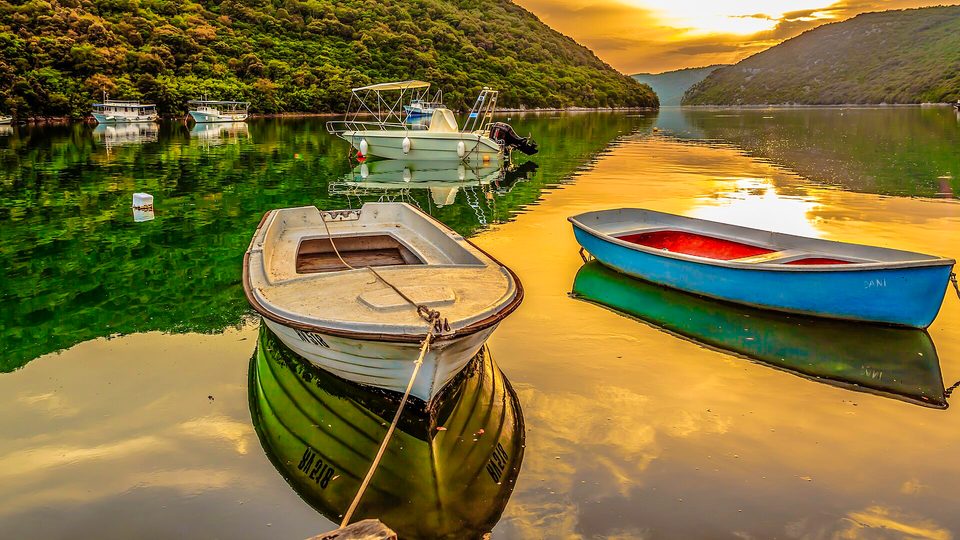
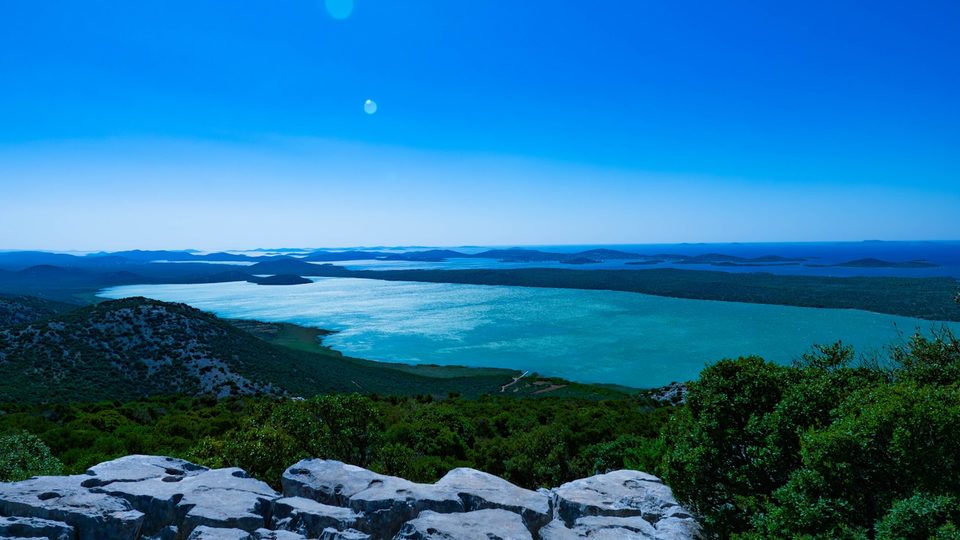
Everyone calls it a fjord although it is not one. Lim Bay is a ria, a river valley drowned by rising sea, about eleven kilometres long and the largest of its kind in the Mediterranean. The fjord label comes from a film: The Vikings was shot here in 1958 with Kirk Douglas and Tony Curtis, and the name stuck.
The name Lim comes from the Latin limes, meaning border, because this inlet once marked the line between the Roman provinces of Italia and Dalmatia. Freshwater springs under the seabed lower the salinity and feed the plankton, which is why oysters and mussels grow so well here and why the bay has been a protected marine reserve since 1980.
Cape Kamenjak
Kamenjak is the wild southern tip of the peninsula, reached through the village of Premantura about ten kilometres below Pula. Most guides call it a national park but they are wrong. Its actual status is a significant landscape, protected as Lower Kamenjak and the Medulin Archipelago. There are no resorts, promenade or loungers, just white dirt tracks running out to thirty kilometres of coastline.
The beaches are rock shelves and pebble notches rather than sand, which is part of why the water stays as clear as it does. Mala Kolombarica has the cliff jumping and the Safari Bar above it, while Debeljak, Njive and Pinižule stay quieter. A short trail near Pinižule leads to fossilised dinosaur footprints in the limestone. Entry is free on foot or by bike, and cars pay a seasonal fee. Bring water shoes, a hat and more water than you think, because there is almost no shade.
Truffle hunting with dogs
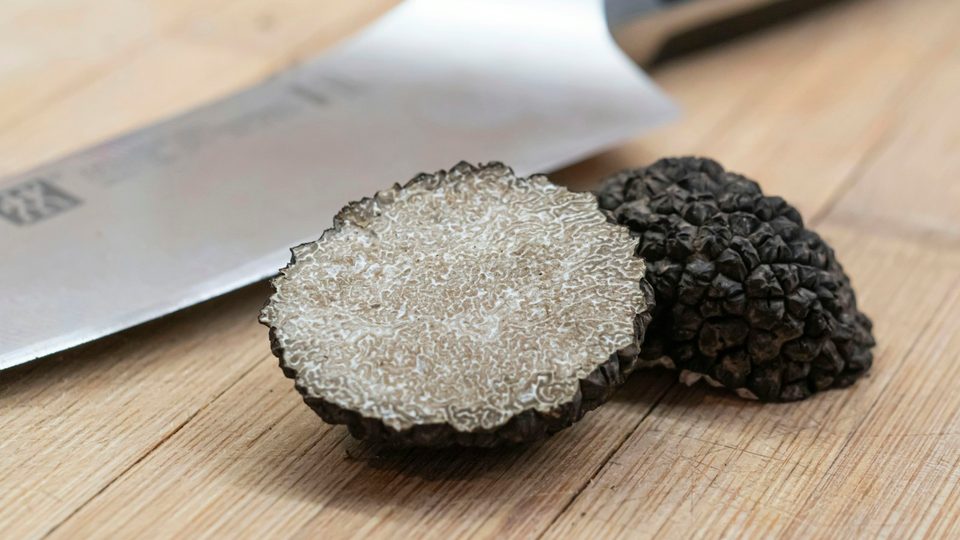
The Motovun forest and the Mirna valley produce some of the best truffles in Europe, and the way to understand that is to follow a dog into the woods. The breed is almost always the Lagotto Romagnolo, a curly Italian water dog. A hunt is short, usually an hour or two walking on soft forest floor, and it ends with a tasting: scrambled eggs with truffle, cheese and prosciutto, and a glass of Malvazija.
Book ahead. White truffle season is October into December, which is also when Livade hosts Truffle Days and prices peak.
The Parenzana cycling and walking trail
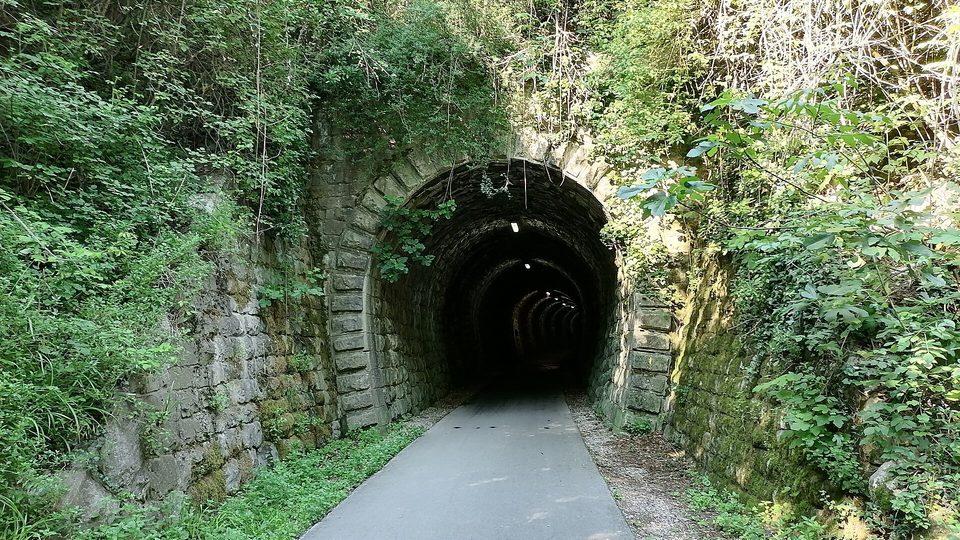
Between 1902 and 1935 a narrow gauge railway carried wine, olive oil and salt from Trieste down to Poreč. It closed, the tracks were lifted, and the villages along it emptied out. Seventy years later the route was rebuilt as a waymarked trail and renamed the Trail of Health and Friendship.
It runs about 123 kilometres through Italy, Slovenia and Croatia. There are nine tunnels totalling roughly 1,530 metres, eleven bridges and six viaducts, the finest at Oprtalj, 75 metres long and 25 metres above the valley. The Italian and Slovenian sections are paved. The Croatian side is mostly gravel, so bring a gravel or trekking bike and a light for the unlit tunnels. The Croatian stretch links Buje, Grožnjan, Livade, Motovun, Vižinada and Višnjan before dropping into Poreč, whose Euphrasian Basilica is a UNESCO World Heritage Site.
Jure Grando in Kringa
Long before Dracula, Europe’s first documented vampire was an Istrian peasant. Jure Grando Alilović of Kringa died in 1656. His neighbours said he came back, walking the village at night and knocking on doors, and that a death followed in whichever house he knocked at. This went on, they said, for sixteen years.
In 1672 the village prefect Miho Radetić and the priest Father Giorgio led nine men to the grave. They found the body undecayed and, by one account, smiling. A hawthorn stake bounced off his chest, so a villager named Stipan Milašić took an axe to his neck. The Carniolan scholar Johann Weikhard von Valvasor wrote the whole thing down in 1689. His word for Grando was not vampire but štrigon, something between a vampire and a warlock. Kringa is a quiet hamlet in central Istria and leans into the story just enough to make the detour worthwhile.
Planning the rest of your trip
Fifteen places is more than a long weekend and less than a full week, which is why most visitors end up with a seven-day route. Two decisions shape the rest. The first is when you come: July and August fill the coast, while May, June and September give you the same weather with half the traffic. The second is where you stay, on the coast for beaches and evening life or inland for quiet and shorter drives to the hilltop towns. Either way, getting to Istria is easier than reaching most of Croatia, and nothing on the peninsula is more than ninety minutes from anything else.