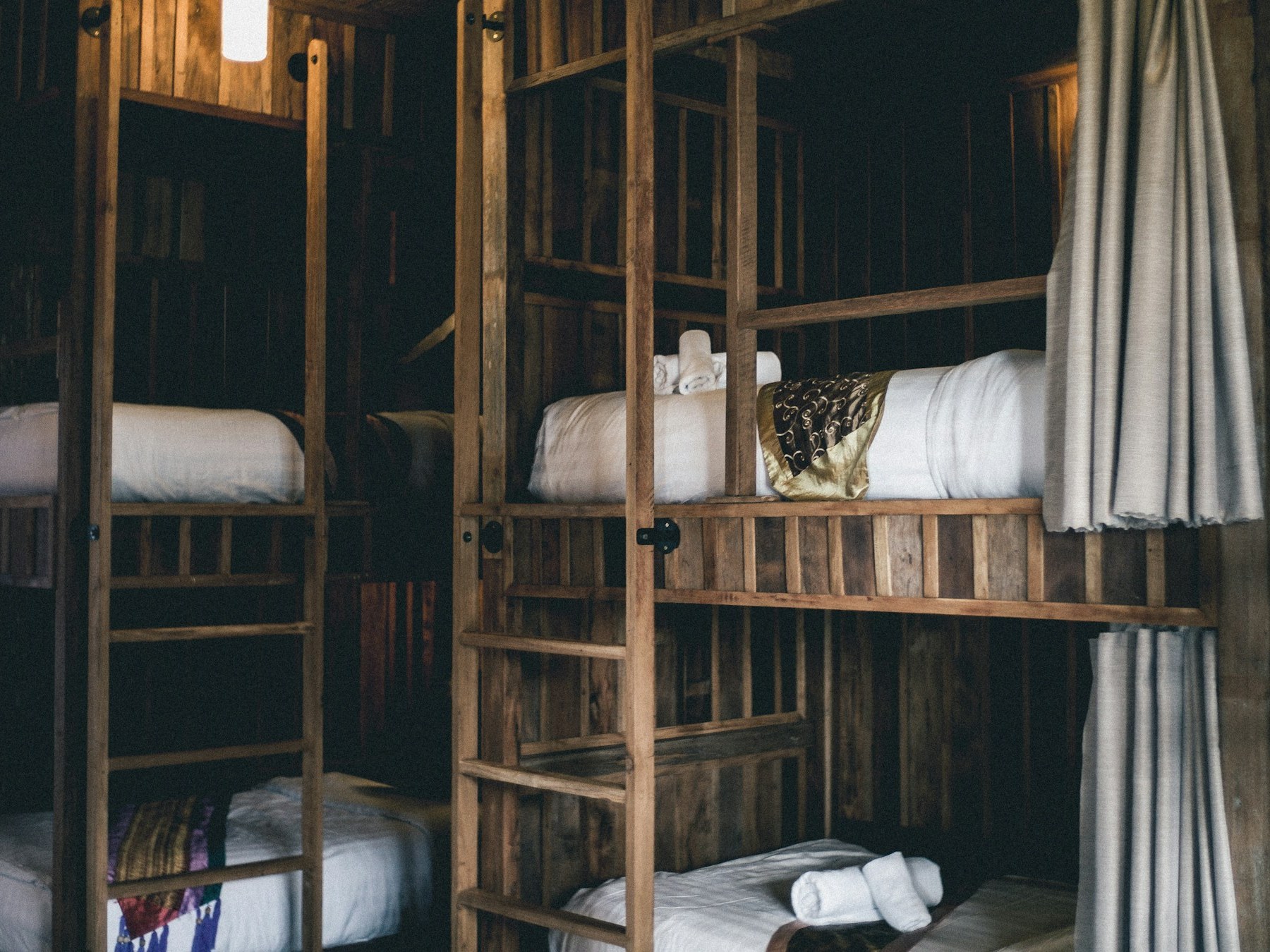
By the time you reach your room on your first solo trip, you may have carried a suitcase through a station, found somewhere to eat, and spent the whole day making decisions yourself. Having somewhere you can properly relax matters.
A hostel sounds sociable. A hotel promises your own space. A female-only dorm feels like a gentler introduction to sharing a room. Each can work, depending on how you sleep, how much privacy you need, and what kind of company you want.
For a first solo trip as a woman, a small female-only dorm is worth considering if you want company and feel comfortable sharing a bedroom. Choose a hotel if privacy and uninterrupted rest are priorities. A private room in a social hostel gives you another useful option: your own room with opportunities to meet people downstairs.
Start there, then check the actual property. The room category only tells part of the story.
Hostel, hotel or female-only dorm: what are you booking?
A female-only dorm is a shared room within a hostel, rather than a separate type of accommodation. You book one bed, and other women can book the remaining beds.
A mixed dorm works the same way, with guests of different genders. A private hostel room is reserved for you and anyone included in your booking. Its bathroom may still be shared.
An ensuite bathroom is attached to the room. In a dorm, the people staying in that dorm share it.
| Accommodation | What you get | What to check | Best fit |
|---|---|---|---|
| Hotel room | Your own bedroom; bathroom arrangements depend on the booking | Reception hours, locks, location, bathroom and noise | Privacy, rest and an independent routine |
| Mixed hostel dorm | A bed in a room shared with guests of different genders | Room size, lockers, curtains, bathrooms and atmosphere | Comfortable sharing a bedroom and keen to meet travellers |
| Female-only hostel dorm | A bed in a room reserved for women | The same dorm checks, plus whether bathrooms are women-only | A shared room that may feel more comfortable for a first stay |
| Private hostel room | Your own bedroom with access to hostel common areas | Shared or private bathroom, activities, noise and total price | Company during the day and personal space at night |
If you are still planning the wider trip, our 21 tips for your first solo trip as a woman cover the decisions around arrival, preparation and finding your feet.
When is a hotel the better choice?
A hotel is a sensible choice when you know that sleeping near strangers will keep you awake, or when you want somewhere to close the door and recover after a busy day.
That private space can matter more than you expect. You can unpack, change clothes, deal with your period, call someone at home, or spend an evening reading without coordinating around other guests.
It also suits a trip built around early starts. If you have a morning hike or a train to catch, your own room lets you prepare without worrying about waking five other people.
Choose the hotel carefully, though. Confirm the bathroom arrangement, reception hours and late-arrival procedure. Read comments about street noise, neighbouring bars and thin walls.
For a woman travelling alone, the route to the entrance deserves attention too. Look at the walk from the nearest transport stop, and check how you will return after dinner. A convenient address is useful only if the journey there works for your plans.
You can build company into a hotel-based trip through a walking tour, a cooking class or a small-group day excursion. Booking an activity for your first full day gives you a straightforward way to start conversations.
Why choose a female-only dorm for your first hostel stay?
A female-only dorm can make sharing a room feel more manageable. If sleeping in a bedroom with men would leave you tense, a women-only room is a reasonable preference.
You may feel more at ease getting ready for bed or having a conversation with another woman travelling alone. For some first-time travellers, that is enough to make the hostel experience enjoyable.
You will still be sharing space. Other guests may arrive after midnight, pack before sunrise or take a long time in the bathroom. Women snore too.
For a first stay, I would look at a four- to six-bed room before a much larger dorm. It gives you fewer people to coordinate around, although behaviour and room design matter as much as the number of beds.
Look for a curtain, an individual reading light, a socket by the bed and a locker large enough for the belongings you want to secure. A curtain gives you visual privacy. Sounds and movement remain part of a shared room.
Are female-only dorms safer?
A female-only dorm changes who shares your bedroom. It does not, by itself, tell you how well the building is managed or how staff handle a problem.
In Hostelworld’s 2025 solo travel survey, 55% of women identified safety as a concern, compared with 18% of men. Those figures describe respondents’ concerns; they do not measure incident rates in different room types.
Official advice can be more cautious than hostel marketing. Smartraveller’s guidance for solo travellers recommends avoiding shared accommodation with strangers and highlights the risks for women.
If you choose a dorm, check controlled access, secure storage, staff availability and recent guest feedback. Your comfort with sharing the room belongs in that decision too.
Should you consider a mixed dorm?
A mixed dorm is an option if sharing with men and women feels comfortable to you and the hostel meets your other requirements.
One detail to consider: the balance of guests can change during your stay. You might arrive in a room with several women, then find that you are the only woman after they check out.
Think about how that would feel before booking. A smaller mixed dorm gives you fewer roommates, but it does not guarantee a particular gender balance.
Also compare the actual beds and bathrooms. A six-bed mixed room with curtains and secure lockers is a different experience from an open twelve-bed room above a late-night bar.
Choose a room you expect to relax in. If a female dorm or private room would help you sleep, include that benefit when comparing prices.
A private hostel room gives you space and company
This is the option worth checking when you like the idea of a hostel but want your own bedroom.
You can join breakfast, use the kitchen, attend an organised activity and then return to your room. YHA Australia’s accommodation FAQ confirms that guests in private rooms can socialise through communal spaces and hostel events.
Before booking, look for evidence of activities you would actually enjoy. Shared dinners, walking tours and cooking sessions offer an easy starting point for conversation. If the social calendar is mainly pub crawls, consider whether that suits your trip.
A private room can still be noisy if it is next to the bar or a busy staircase. Ask about its position if you are a light sleeper.
And compare it with hotels for the same dates. Private hostel rooms can cost as much as hotel rooms, especially in popular destinations. The common areas and activities may still make the hostel worthwhile for you.
Check the bathroom, entrance, and reception before booking
These details deserve as much attention as the room photographs.
First, clarify the bathroom. Is it inside your room, along the corridor, or on another floor? Is it shared by women, mixed, or individually lockable?
For example, Hostelle in Amsterdam explains in its FAQ that its showers and toilets are separate from the bedrooms. A women-only property can still have corridor bathrooms.
Look for shower cubicles that lock, somewhere dry for your clothes, and a hook for your towel. If you expect to be travelling during your period, check for a convenient bathroom and a bin for hygiene products. Those practicalities can make mornings much easier.
Second, check when a person will be available to help. Twenty-four-hour access means guests can enter the building. Twenty-four-hour reception means staff are available at the desk. Confirm both if you are arriving late.
Third, inspect the route to the entrance. Australia’s travel safety advice for women specifically recommends avoiding accommodation with entrances in isolated locations or back streets, and using reviews when the situation is unclear on a map.
Check the transport timetable for your arrival time. Include stairs, lifts and luggage in your planning. Carrying a suitcase up four floors alone can turn a charming room into an inconvenient choice.
Which reviews should you read?
Start with recent reviews from women who stayed alone, then look for comments about the features that matter to you.
Useful details include whether staff took concerns seriously, whether room doors locked properly, how bathrooms were maintained and whether guests could sleep at night.
Repeated complaints about uncontrolled access or dismissive staff deserve close attention. For noise complaints, consider the context: a room above a bar may be unsuitable for you even if other guests loved the atmosphere.
The overall rating is a starting point. The written reviews help you picture the stay.
Compare the cost of the whole stay
For a dorm, the advertised price is generally for one bed. For a private room, check the total payable for one guest.
Compare the same dates and similar cancellation terms, then add any costs relevant to your booking:
- Mandatory taxes or fees.
- Towels, locker locks or luggage storage.
- Breakfast and other meals.
- Transport between the accommodation and your activities.
- Charges connected with late arrival.
A hostel kitchen may help with food costs. A cheaper property further out may require extra transport. Price both versions of your trip before deciding.
If you are booking an organised tour or package, also check our guide to single supplements. That charge relates to the package’s room arrangements and should be checked separately from ordinary hotel pricing.
Try to keep some money available for a room change or an unexpected night elsewhere. Having that flexibility makes it easier to respond if the accommodation does not suit you.
Make your first night easy
Your first evening is a good time to simplify things. Save the address, confirm check-in, and plan the journey from the airport or station before you leave home.
If you arrive after a long journey, consider a private room for the first night or two. You can rest, get familiar with the area, and try a dorm later if you still want to.
If you choose a dorm straight away, read the arrival instructions and find out whether you need your own padlock.
For shared accommodation, a few things are useful: earplugs, an eye mask, shower sandals, comfortable sleepwear and a small bag that keeps toiletries together. Pack early-departure essentials somewhere easy to reach.
Our guide to preparing for solo travel as a woman covers the wider packing and preparation checklist.
What if you feel uncomfortable in your room?
Contact reception and explain the specific problem: unwanted attention, a door that will not lock, a guest bringing visitors into the room, or noise that prevents you from sleeping.
Ask for a different room or another available solution. If the problem involves harassment or threatening behaviour, move to a staffed or public area while you arrange help. Contact local emergency services if you are in immediate danger.
If staff cannot resolve the situation, changing accommodation is a reasonable decision. Keep your booking confirmation and records of any discussion. If you reserved a female-only dorm and are offered a mixed room, show the booked category and ask the property or booking platform to resolve the mismatch. Refunds and alternative arrangements depend on the booking terms and circumstances.
You can also move simply because shared sleeping does not suit you. Learning what helps you rest is useful information for the next trip.
Choose somewhere you can settle in
Think about the end of the day: where you will leave your bag, take a shower, change clothes and go to sleep.
If a small female dorm feels comfortable, try it. If you need a room to yourself, include that in the budget. If you want company with your own sleeping space, compare private rooms in social hostels.
You can also have accommodation and company arranged through a small-group trip. Our guide to Croatia group trips for solo women explains that option. Check the room-sharing arrangements, bathroom setup and any single-room supplement before booking.
Your accommodation should help you rest and enjoy the next day. Choose the place that makes that easier.